Commercial Solar Installation Process Explained | PickRenew
Commercial Solar Installation Process: What to Expect,
Step by Step
For many business owners, the idea of installing a solar plant raises practical questions.
What happens first? How involved will my team need to be? Will operations be affected?
When will the plant start generating power? Knowing the process in advance removes much
of the uncertainty and helps you plan with confidence.
A well-run solar project is not a single event. It is a series of clear stages, each with its own
purpose. This guide walks through the commercial solar installation process from the first
conversation to long-term support, so you know exactly what to expect.
Why Understanding the Process Matters
Businesses that understand the stages of a solar project make better decisions and avoid
surprises. They know which information to share, which approvals to expect and what
questions to ask at each point. They are also better placed to compare partners, because a
reliable EPC provider will be able to explain every stage clearly and openly.
Step 1: Initial Consultation and Electricity Review
The process begins with a conversation about your goals and your electricity use. Your
recent electricity bills are reviewed to understand how much power you consume, what tariff
you pay and when your demand is highest. This stage shapes everything that follows,
because a solar plant should be designed around how your business actually uses energy.
Step 2: Site Survey and Technical Assessment
Next, the team visits your facility. The roof or land is inspected for available area, shading,
orientation and structural strength. The existing electrical setup is also reviewed so the plant
can be connected safely. This survey replaces assumptions with facts and is the foundation
of an accurate design.
Step 3: System Design and Proposal
Using the data from the survey, engineers design the system: the capacity, the layout, the
choice of components and the electrical connections. You then receive a proposal that
explains the design, the expected generation, the estimated savings and the scope of work.
This is the stage to ask questions, compare options and confirm what is included.
Step 4: Approvals and Documentation
Depending on the project, approvals may involve DISCOM permissions, net-metering or
grid-connection formalities, and safety or electrical clearances. Requirements vary, so it is
important to confirm what applies to your project. An experienced EPC partner manages this
paperwork so that your team can stay focused on running the business.
Step 5: Procurement and Quality Checks
Once the design and approvals are in order, the required equipment is procured: panels,
inverters, mounting structures, cables and protection devices. Good partners source from
reliable manufacturers and check materials before they reach the site, because the quality
of components has a direct effect on long-term performance.
Step 6: Installation
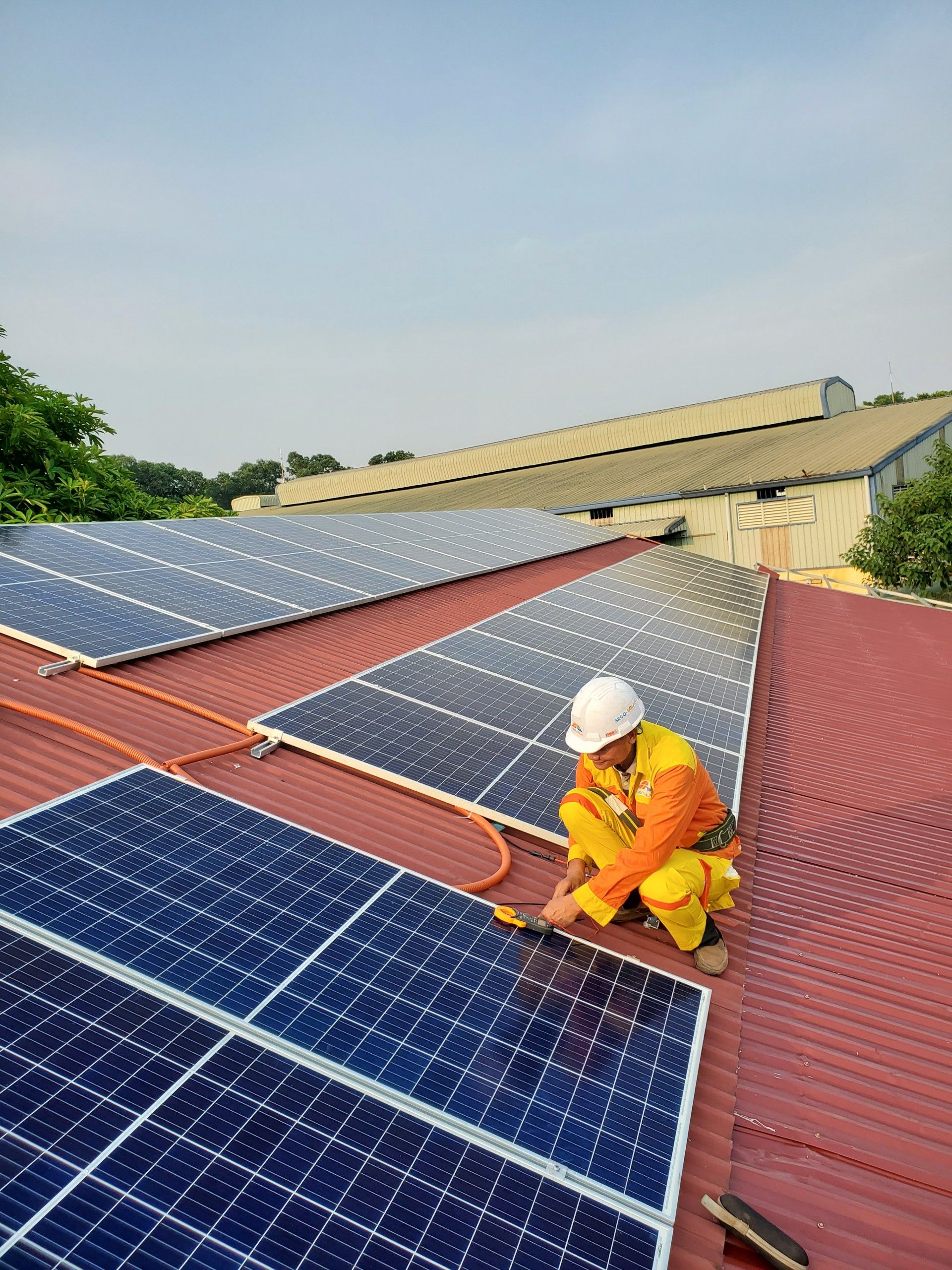
Installation is when the plant takes physical shape. Mounting structures are fixed, panels are
placed, and cabling and electrical equipment are connected. The work is scheduled around
your operations and carried out with proper safety measures, usually on roofs or open areas
away from production or daily activity.
Step 7: Testing, Commissioning and Handover
Before the plant goes live, it is tested to confirm that every part is working correctly and
safely. After the required checks and connection formalities, the plant is commissioned and
begins supplying power. You receive the relevant documentation, and your team is briefed
on how the system works and how performance can be tracked.
Step 8: Monitoring and After-Sales Support
Commissioning is the start of the plant’s working life. Monitoring tracks generation against
expectations, while regular cleaning and inspections keep performance steady. Dependable
after-sales support ensures that any issue is resolved quickly, protecting the savings the
plant was built to deliver.
The Process at a Glance
In summary, the project moves from understanding your energy needs to assessing the site,
designing the plant, arranging approvals, installing and testing the system, and finally
commissioning it with ongoing support. At each stage, the EPC partner carries out the
technical work, while your team contributes information and decisions at the right moments.
Your role is mainly to share recent electricity bills and facility details at the start, provide site
access for the survey, review and approve the proposal, supply the documents needed for
approvals, coordinate the installation schedule with your operations and take part in the final
handover. A clear, shared understanding of these responsibilities keeps the project on track.
What Affects the Timeline
The time a project takes is not the same for every facility. The main influences include:
• The size and complexity of the plant.
• How quickly approvals and permissions are processed.
• Availability of materials and equipment.
• Site conditions, such as roof repairs or access limits.
• Coordination with your operating schedule.
An experienced EPC partner will share a realistic schedule after the site survey, rather than
a promise made before the facts are known.
How You Can Help the Project Run Smoothly
• Share electricity bills and facility details promptly.
• Nominate one point of contact for the project.
• Provide site access and safety information in advance.
• Review proposals carefully and confirm the scope in writing.
• Plan any shutdown needed for connection with your team.
Questions to Ask Your EPC Partner
• What does each stage of the project involve, and who is responsible?
• Who will handle approvals and documentation?
• How will installation be scheduled around our operations?
• How will you keep us informed of progress?
• What support will we receive after commissioning?
Conclusion
A commercial solar project follows a clear path: understanding your needs, assessing the
site, designing the plant, arranging approvals, installing and testing, and supporting
performance over the years. When each stage is handled carefully, the project becomes
smooth and predictable, and the plant delivers value from the day it goes live.
At PickRenew Energy, we help industrial and commercial clients with end-to-end solar EPC
solutions, from design and installation to approvals and maintenance.
Ready to find out what solar could mean for your facility? Talk to PickRenew Energy:
pickrenewenergy.in